For the sake of this column, I thought it was worth unpacking the value of the essay in general — the staple tool in developing skills in evaluating, arguing and employing rhetoric to show you understand what you’re learning.
Why? My X feed has been abuzz with thoughtful discourse about one of the most thoughtless essays ever written: a reaction paper assignment submitted by a student at the University of Oklahoma.
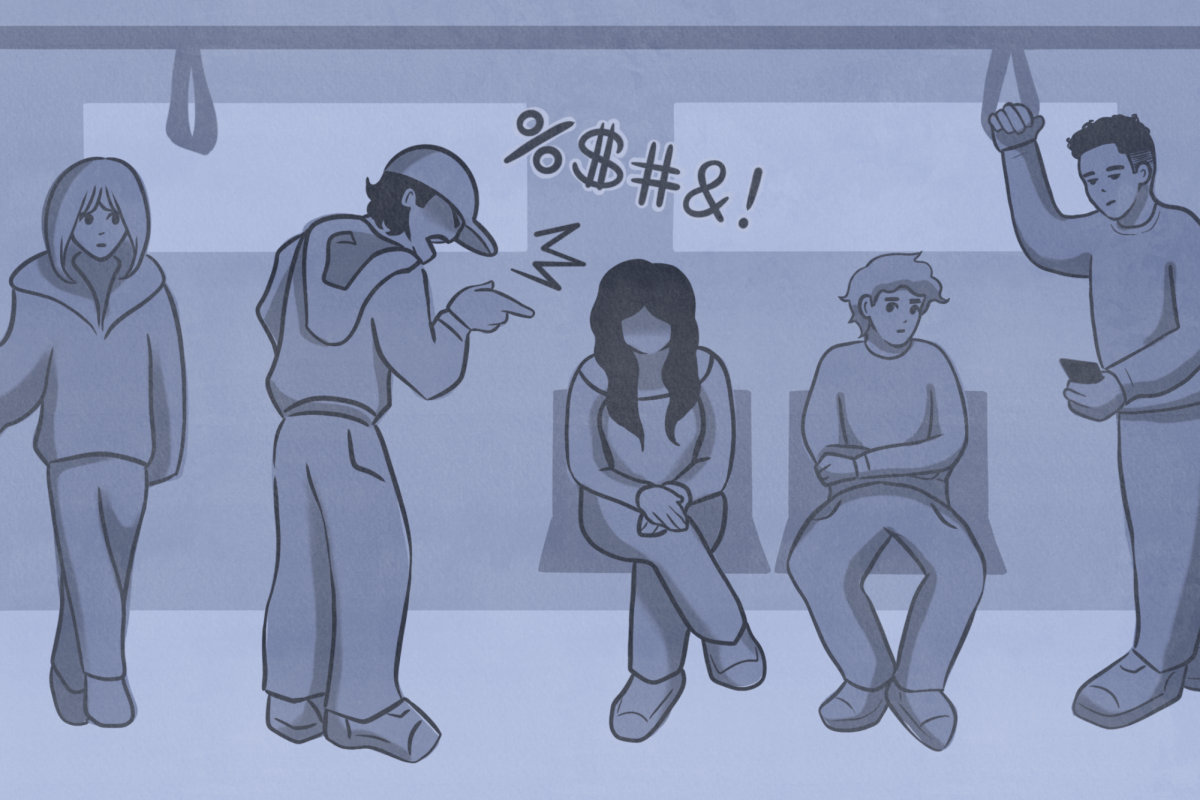
The assignment required at least 650 words for full credit. For the record, she turned in 630, and beyond missing even that basic requirement, her “reaction paper” — meant to engage a scientific article — became a vessel for her transphobic, heteronormative beliefs (read: bigoted).
I don’t say this because I disagree with the content. I say it because it was an objectively bad paper: It didn’t engage the assigned reading, didn’t make an argument and didn’t cite any scientific evidence.
The entire essay hinged on the idea that we must fulfill gendered expectations because we’re made in God’s image, yet they didn’t cite a single Bible verse to support it. Instead, the student mostly regurgitated things we’ve all heard before. Truly, “there is nothing new under the sun,” as Ecclesiastes 1:9 puts it. See how easy that was?
Get The Daily Illini in your inbox!
What I had read was a stream-of-consciousness rant that, if I’m being generous, only vaguely related to the article in question. The academic paper was just a pretext for a sermon.
A teaching assistant rightfully gave it a zero. Maybe that was harsh; maybe the student could have eked out a few sympathy points on technicalities. But, pedagogically, it’s the kind of “wake-up” score that tells a student, plainly: You need to try again.
The student complained, and OU suspended the TA.
My timeline is full of people debating the content of the paper or the politics of the grade. But I think the more compelling dimension to explore is how quickly a public university folded under pressure.
OU behaved exactly the way a structurally weak institution behaves: by avoiding risk at all costs. Right now, American universities — especially in red states — are very weak institutions.
As someone who has been telling my own university to divest from fossil fuels for the past two years, I’m no stranger to the behind-the-scenes scaffolding that holds the modern university upright.
Public universities operate in a constant crouch. They’re battered by unreliable state funding, dependent on tuition dollars, beholden to donors and subject to boards packed with political appointees.
When you operate that way, every headline is a liability and every controversy is a budget threat. Gone are the days when a university could posture as theologian John Henry Newman’s ideal as a bastion of “universal knowledge,” existing merely for the sake of diffusing and extending liberal learning. The modern university of the 21st century is enmeshed in a web of political and financial pressures, forced to act like a firm whose primary goal is to minimize legal exposure.
So of course OU bent the knee. Had the university defended the TA, the chain reaction was almost guaranteed: the student would sue, and discovery would dredge up every inconsistency in the grading record — because all grading is inconsistent — along with any stray faculty emails that read poorly out of context or suggest bias.
The university would either settle or endure a costly, very public legal ordeal. From there, state officials, sensing opportunity, could punish the university for “overreach” with funding cuts, grant freezes or new investigations.
From there, the spiral is familiar: a budget crisis, rising tuition, slashed research — another public university retreating into hiring freezes and austerity for the crime of defending a zero on a reaction paper.
In other words, when OU decided not to defend a failing grade, it acted as a rational, risk-minimizing actor. Given the threat of institutional destabilization, it’s an easy choice. X timelines are quick to forget, anyhow.
That’s the problem: The cowardly thing is, by default, the most rational option. It also sets a dangerous precedent: Academic judgment is negotiable, political pressure is not.
Writer Scott Korb has long argued that the student essay is deteriorating. In his column, “The Soul-Crushing Student Essay,” describes the creeping rise of the passive voice in freshman writing. He notes a cultivated “objective distance,” which he interprets as a signal of total detachment.
Over time, we’ve been conditioned to detach; years of schooling have trained us to write just to get through the assignment. My cohort has perfected the art of the bare minimum, performed with total existential distance. The essay isn’t an act of engagement anymore, as much as it’s a chore. A checkbox on the Notion calendar. A hoop to jump through.
Enter the OU case: a student submits a reaction paper that doesn’t just blatantly disregard the prompt but is proudly indifferent to the entire point of the assignment. What we’re seeing is not just political posturing for clout. Rather, I choose to see it as a reflection of the broader drift.
The essay has become an empty form for a generation that no longer pretends to care about the medium at all.
What else can we say about the essay? The writer Louis Menand, in explaining what college is for, argued that higher education functions as a long, slow sorting mechanism — a four-year test of judgment, reasoning and sustained engagement. Essays are part of that test. They are how the university decides who can form an argument and who cannot; they are the imperfect but necessary artifacts through which gatekeeping happens.
If a university can no longer defend a failing grade, then the entire evaluative function cracks. A TA cannot enforce norms if doing so risks institutional reprisal. A professor cannot fail a student if that failure becomes a political event. The essay becomes unmoored from the context that gives it meaning.
Thus, we’re losing the essay as an evaluative institution — a contract of trust between writer and grader — and devaluing both our educational systems and the degrees we earn in the process.
This is why we’re seeing a gradual resurrection of old assessment forms: handwritten responses, oral exams, in-class essays and anything that feels less vulnerable to AI and less likely to spark litigation.
There will never be a perfect way to demonstrate learning. With the advent of AI, things are less about how best we can show understanding and more about how we can maximize displays of original thought. We’re seeing the bar get lowered in real time.
While this move feels like an inevitability, essays — flawed, messy, beautiful essays — are still the best laboratory we have for thinking in public. They force you to read, interpret, argue and support with evidence. Hell, you’re reading an opinion column right now; the form still works.
But the OU incident shows how precarious it all is. This episode exposes a greater danger in the precedent it sets. When grading becomes a political risk, everyone loses the trust that makes education work.
Raphael is a senior in ACES, and this is the second time he’s mentioned Newman in an essay.