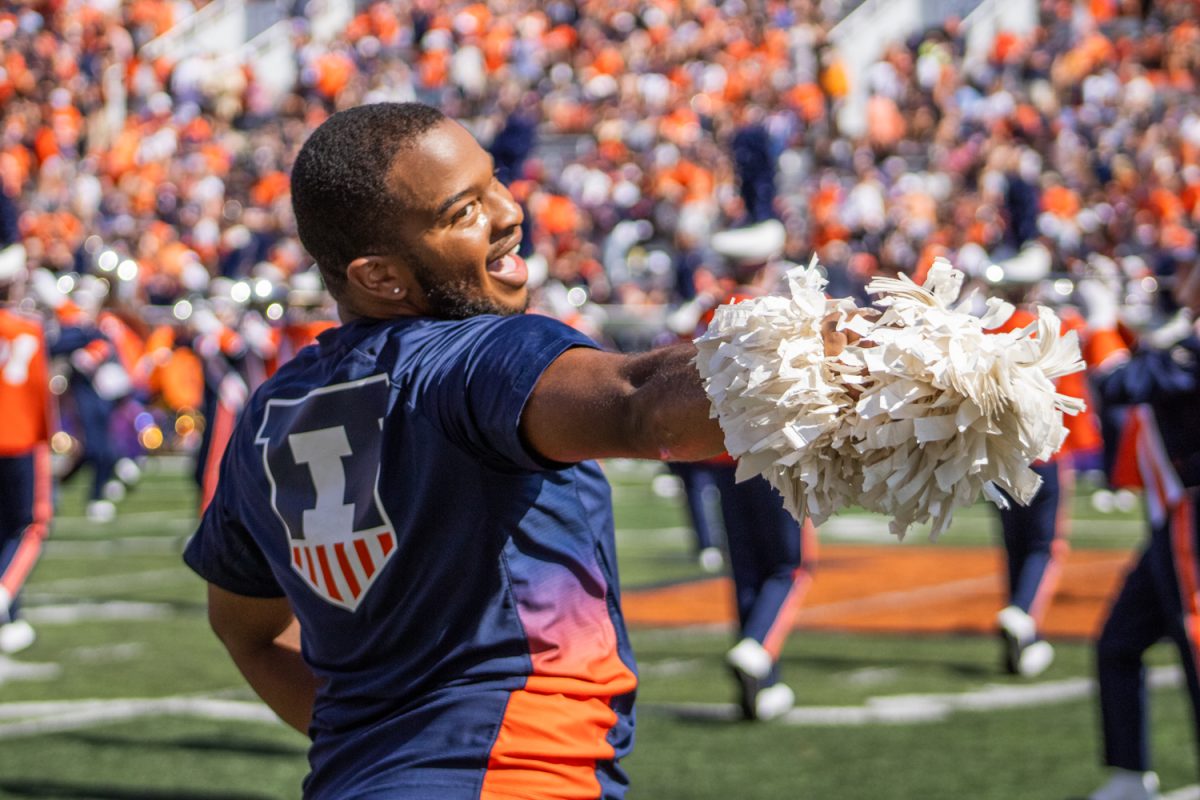
While celebrating a friend’s birthday, Jeremiah Jordan received an email that redefined the culture of collegiate dance teams. Opening the message surrounded by his loved ones, Jordan discovered that he had been selected as the University’s first male Illinette.
“I was in disbelief,” said Jordan, junior in FAA. “Oh my goodness, I was in such disbelief.”
From 7 years old, Jordan lived and breathed dance. He did anything he could to get and stay involved in it.
As a child, Jordan lacked support from his mother regarding his passion for dance, including financial help. He was self-taught until the day he was able to apply for a worker’s permit. Throughout high school, Jordan worked an after-school job to pay for dance classes, a true testament to his commitment to dance.
“Growing up, I experienced a lot of hardships in many different ways,” Jordan said. “Dance was my way to keep me focused, keep me on track, to help me experience the things that I was going through at that time.”
As he continued pursuing his love for dance, Jordan danced in programs at the Hawkins House of Dance, Deeply Rooted Dance Theater and at his high school, Proviso East.
Even with minimal familial support, Jordan’s hard work throughout his dance career gave him the skills necessary to pave the way as an Illinette.
“You have to do what you got to do sometimes,” Jordan said. “It taught me if I really want something to go out and work for it. And I’m very determined to do the things that I want in life, so I’m always going to work for what I want.”
This determination played a crucial role as Jordan imagined himself in the role of an Illinette.
According to Barry Houser, director of the Marching Illini, the Illinettes were started in the ‘70s as the marching band’s official dance team. The team, along with teams across the nation, had a rule that the squad of 28 must be composed of only females.
Houser was the one to question, “Why?”
“We all, as a university, started to put things under the microscope and look at things from that perspective of, ‘Why does it need to say that it needs to be 28 female dancers? Why can’t we just say it’s 28 dancers?’” Houser said.
Since its founding, the University has amassed a variety of traditions, with many revolving around athletics. Recently, the University has been changing many of these traditions to align more closely with modern acceptable practices. One of the most controversial changes made by the University was the retirement of Chief Illiniwek as the mascot.
When he first arrived at the University, Houser said he had a lot of “trepidation” about changing any rules or traditions out of concern for others’ opinions.
“I was so worried about what alums were going to think, what people were going to think, so much so that it almost kept us from moving forward,” Houser said. “If there’s gonna be people that respond negatively, then I feel that that’s more their problem than mine.”
A little over a decade ago, Houser officially wrote into rule that anyone — regardless of gender — could audition to be an Illinette.
When deciding whether or not to audition, Jordan approached Houser looking for advice. Houser assured Jordan that the selection process was talent-based, and if he loves dance and being part of the Illini athletics atmosphere, he should go for it.
Jordan also turned to his close friend and fellow junior in FAA, Jayla Anderson, before auditioning. Anderson’s response mirrored Houser’s, pushing Jordan to audition because, “you never know how things will work out, and it doesn’t hurt to try out.”
After getting on the team, Jordan’s focus shifted to fitting into the crew as the first male Illinette. Jordan said he sometimes felt like the “odd one out” when he first joined the team, but he quickly fell into the welcoming atmosphere created by the other Illinettes.
“To be completely honest, I was a little bit worried because it’s new for everybody,” Anderson said. “(Jordan) had grown up in Black dance and Black dance teams, where they do HBCU style dance, Majorette style, and this is a team that has never had a male on their team before. So I think I was a little bit worried about how that would be perceived and how that relationship would go, but I think that he’s handling it very well with a lot of grace.”
Jordan expressed that his background focus on HBCU dance culture contributed to his original hesitation to audition for the Illinettes. Jordan explained that HBCU dance teams are typically very strict about having all-female teams, so he was unsure what to expect when joining the Illinettes.
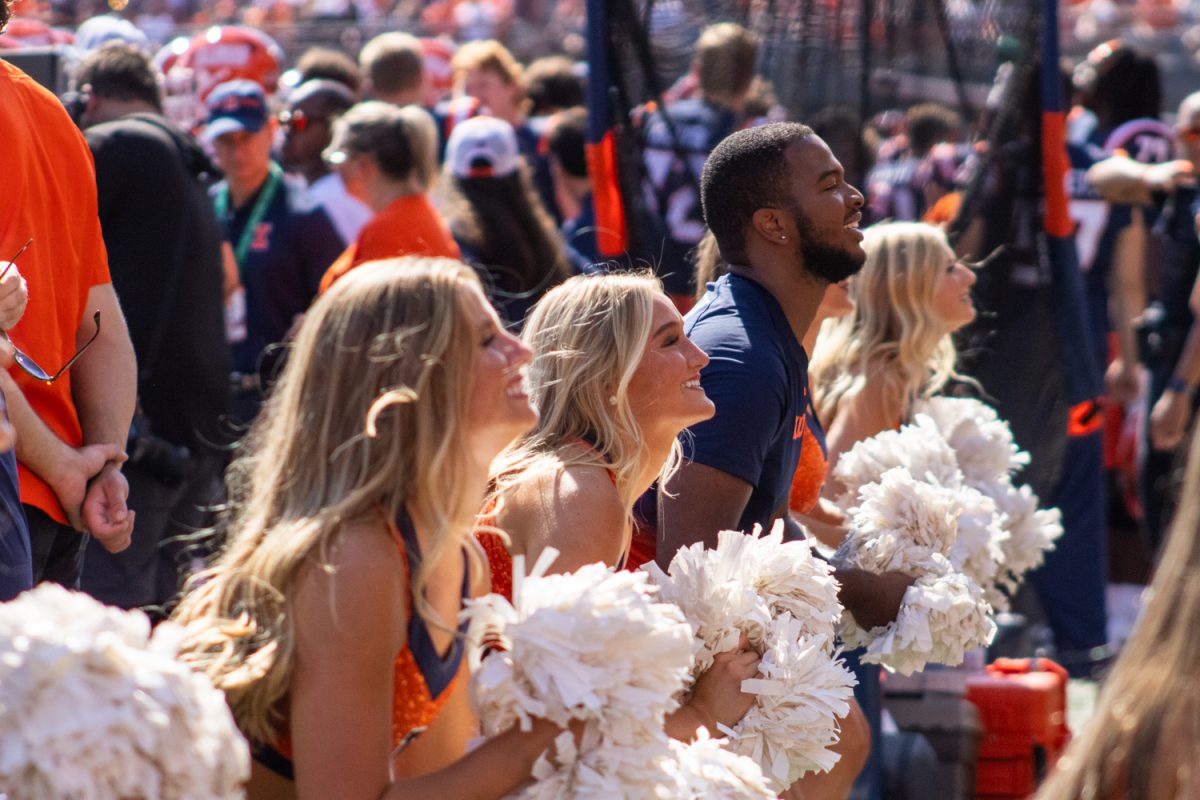
Now, as the first male Illinette, Jordan carries the torch and lights the way for others who may be in the same position as him.
“I have mad respect, because even though we don’t have any parameters on gender, when you see that the team has been all female since the 1970s, that could be intimidating,” Houser said. “I think it takes a really special individual to also see that and to put himself in that situation.”
Despite having an uncertain start, Jordan has taken his new position and flourished. He hopes that other male dancers can look at him and take inspiration from his journey.
Houser also hopes that Jordan’s representation of the University’s new precedents will help inspire other universities and institutions to follow suit and start reevaluating their rules and traditions.
“Carrying the title of being the first — to be quite blunt — (feels) bad a** I must say to you,” Jordan said. “It makes me feel good to know that I am the first, especially being a Black man at a predominantly white institute here at the University. It makes me feel good to know that I can inspire the next generation of male dancers … who want to audition for the team.”